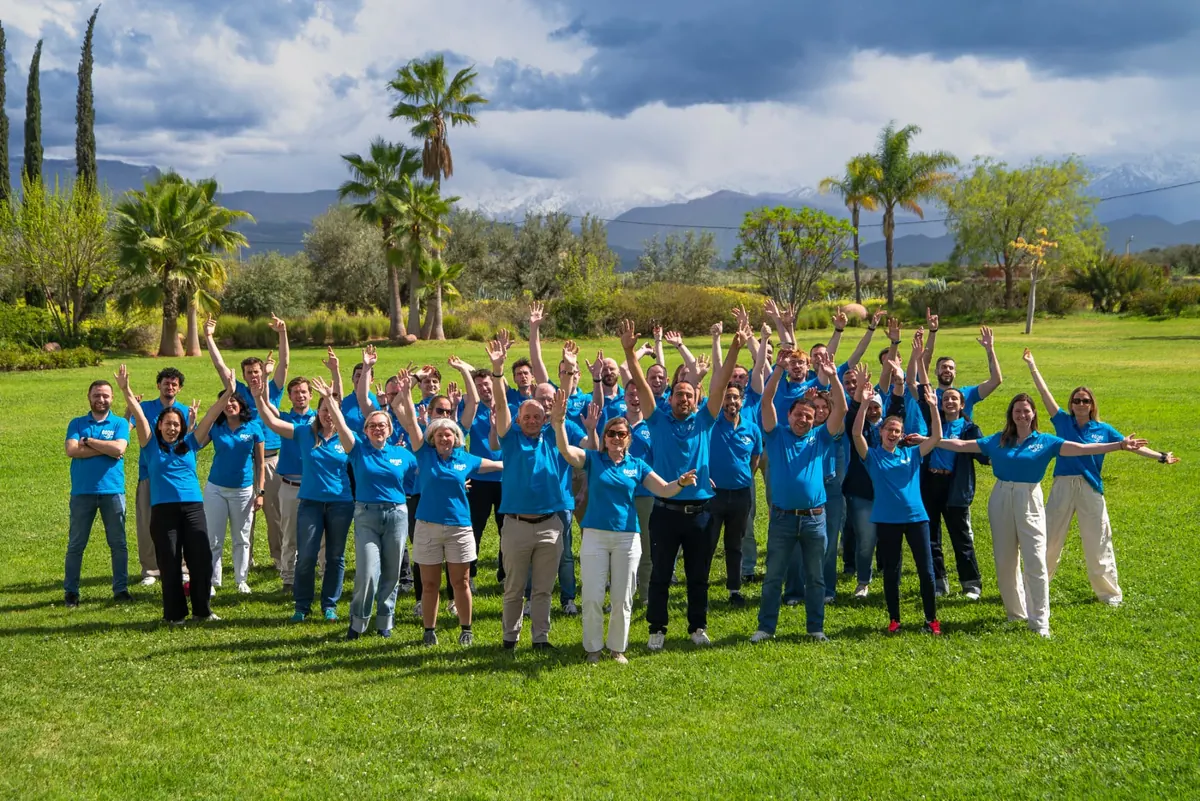
A corporate retreat in Europe should answer a business question that cannot be solved in another round of video calls. The destination matters, but it comes second to the work: the decisions you need, the people who must make them, and the alignment required to move forward.
At ARC Experience, we design offsites around that reality. When the experience has a clear purpose, shared time away can turn a scattered set of opinions into direction, ownership, and momentum.
Start with the Business Question
Before discussing flights or venues, define the organizational objective. The useful starting point is not, “Where should we go?” but, “What must be different when this group returns to work?” That question determines who attends, how much time is required, what the sessions need to achieve, and which European setting can support the work.
A concise objective brief should identify the organizational moment, the group that needs to work together, the change required, and the constraints that shape the program. This gives founders, COOs, Chiefs of Staff, and People and Culture leads a clear basis for explaining why the investment is needed now.
The destination should then serve the objective. A confidential leadership discussion needs different conditions from a company-wide strategy reset. A newly merged organization needs different room layouts, group composition, and shared working time from a milestone event. Treating every offsite as the same format creates avoidable friction before the work begins.
Match the Format to the Organization
The right format follows the business objective, not simply headcount. A small leadership group may need protected time to resolve a small number of consequential issues. A wider organization may need a program that helps people understand a new direction, test its implications across functions, and build confidence in how work will change.
Use the following comparison to match the format and setting to the work required:
- Leadership alignment: The room should include the founder or chief executive, executive team, and only the leaders whose authority or expertise is necessary for the issues at hand. A small, carefully chosen group suits a focused leadership retreat. Sessions need confidentiality, candid challenge, sufficient uninterrupted discussion, and a clear way to address disagreements that have been carried through normal meetings. Choose a quiet European setting with privacy, limited outside distractions, and one reliable shared base for concentrated work. For the case for holding this kind of intervention before further growth, see ARC’s leadership offsite before scaling.
- Strategy reset after rapid growth: Include the executive team, functional leaders, and selected operators who can test whether the strategy works across the organization. A wider group is often better served by a strategy program than a leadership-only retreat. The design needs plenary sessions for shared context, smaller functional and cross-functional groups, and structured opportunities to translate direction into practical priorities. Select a European setting with flexible meeting space, dependable breakout capacity, and easy movement between working groups without splitting the organization across multiple sites.
- Post-merger integration: Bring together leaders and key managers from both former organizations, alongside the people responsible for operating model, people, product, customer, and commercial decisions. Group size depends on the integration scope, but a program that spans both organizations can create productive contact across former boundaries. Sessions need mixed-company working groups, clear attention to different ways of working, and time to surface assumptions that may otherwise remain unspoken. The setting should provide a strong plenary space, multiple breakout rooms, and a contained environment where teams can work across organizational lines rather than returning to separate camps.
- Milestone event: Include the people who need to understand and mark a meaningful organizational transition, from a leadership group to the wider company. The format can combine shared moments with structured working sessions, depending on the milestone. The design should connect the transition to the organization’s future direction, recognize what has changed, and give teams a common language for what comes next. Choose a European setting that can hold the full group together for key moments while providing space for smaller conversations about the implications for teams and functions.
- Reconnecting a distributed team: Include the core team or wider organization whose day-to-day work depends on stronger relationships across locations, functions, or reporting lines. A shared-base retreat suits this work, combining whole-group sessions with carefully mixed smaller groups. The program needs structured cross-functional interaction, working sessions that reveal how colleagues contribute, and time for relationships to develop beyond familiar remote meeting patterns. Select a European setting where everyone can stay and work from the same base, with accessible spaces that support repeated, purposeful contact throughout the program.
These formats are distinct because the work is distinct. Leadership alignment concentrates authority in a small room. A strategy reset broadens participation so that direction can be understood and tested. Post-merger integration deliberately brings former organizational boundaries into the work. A milestone event creates a shared marker for transition. Reconnection helps distributed colleagues rebuild the working relationships and culture that remote routines can weaken.
Choose a Corporate Retreat in Europe for Working Conditions
When choosing a corporate retreat in Europe, assess the destination through the working conditions it creates. The question is whether the setting enables the right conversations, group configurations, and level of focus for the objective.
For leadership work, privacy and concentration matter more than extensive activity options. Senior teams need space to speak plainly, hold difficult conversations without interruption, and remain together between sessions. A setting with a contained footprint and private meeting areas supports that work better than one that disperses people across a busy location.
For a strategy reset or integration program, room configuration is central. The venue needs a plenary space that can hold the whole group, enough breakout rooms for mixed teams, and practical proximity between sessions. Long transfers, fragmented accommodation, and insufficient working space reduce the time available for the cross-functional exchange that these formats require.
For a distributed team, the strongest setting is usually a shared base that makes structured interaction easy. People should be able to move from group work to informal conversation without leaving the program behind. This is not about generic social activity; it is about creating repeated opportunities for colleagues who rarely meet in person to understand each other’s context, build trust, and establish a stronger shared culture.
For travel and budget planning details, including how to assess timing, group movement, and program costs, read ARC’s guide to taking US teams to Europe.
Turn Shared Time Into Lasting Progress
An offsite creates value when its objective continues to shape how the organization works after people leave. That means the program should make the intended shift visible: a leadership team that has resolved a strategic tension, a scaling company that understands its direction, merged teams that can work across boundaries, or distributed colleagues who have stronger foundations for collaboration.
Communication beyond the room matters. Teams who did not attend should understand the organizational context, the priorities that now guide the work, and what will change in practice. The message should be consistent with the purpose of the gathering rather than reduced to a summary of where the group went.
ARC’s role is to bring the objective, format, destination, and delivery into one coherent experience. The work begins with the organizational question and ends with a program designed to strengthen culture, alignment, and momentum where they are most needed.
Turn Your Retreat Into Measurable Momentum
ARC Experience designs each corporate retreat in Europe around the organizational objectives, working sessions, and shared commitments your organization needs next. We bring strategy, agenda design, destination planning, and delivery into one coherent experience, so the investment supports more than time away from the office. Contact us to discuss your objective, team size, and the constraints shaping your next offsite.